Are you a custom software development company or an AI specialist?+
Both, in that order of usefulness to you. Axionry does custom software development: full products, APIs, web and app development. Every build is led by an engineer whose day job is AI systems in production. If your product does not need AI, we say so and build it without.
How much does AI product development cost?+
A single production AI feature starts around $3,000; a zero-to-one AI product runs $5,500 to $10,000 depending on scope, and an AI agent stays under $5,000. Final pricing depends on your use case, features, integrations and complexity, so we set it on a call. Either way it lands well below typical US agency quotes, because you're paying one senior architect, not an agency org chart.
What stack do you use for AI products?+
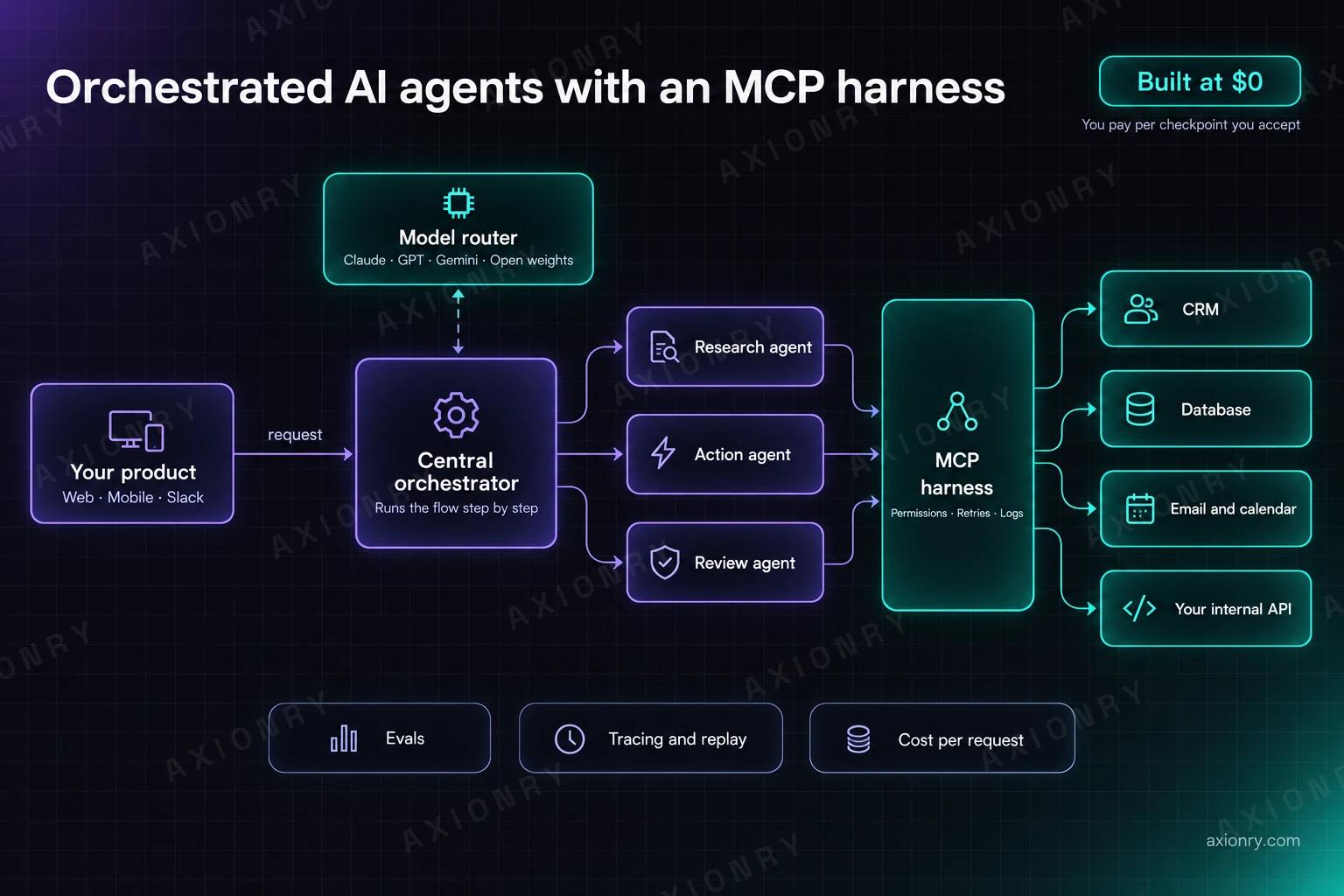
Node.js/TypeScript and Python, event-driven microservices, PostgreSQL/MongoDB/Redis, multi-LLM routing (OpenAI, Anthropic, open-weights), MCP for tool integration, deployed on AWS or Azure, usually mostly covered by startup credits I help you secure.
Do you build RAG systems?+
Yes: retrieval pipelines over private data with evaluation harnesses, hybrid search and cost-controlled embeddings. RAG demos are easy; production RAG that answers correctly is engineering, and that's the part I sell.
Can you take over an existing half-built AI product?+
Yes. Rescue engagements start with a one-week architecture and cost review, then a fixed-scope plan to production. Most 'stuck' AI products suffer from missing evaluation and runaway inference costs, both fixable.
How is Axionry different from a typical AI development company?+
Most AI development company engagements staff juniors behind a senior sales call. Axionry is one senior architect with a public track record: AccioMatrix built solo to 20+ enterprise clients, a published Retell AI case study, and infrastructure run at a fraction of typical cost.
How long does it take to build an AI product?+
A single production AI feature in an existing product takes 2 to 3 weeks. A zero-to-one AI product, from architecture to production, takes 3 to 4 weeks. A demo ships within two weeks, launch-ready builds within four and enterprise-grade work within about seven, and timelines can be discussed, and a monthly retainer suits teams that need ongoing engineering after launch.
Can I hire you as a fractional CTO for an AI product?+
The retainer covers what most AI teams need from that role: ongoing senior AI engineering and architecture decisions, from $6,000 a month. The person on the sales call is the person making the architecture calls. If you need a defined product built, a fixed-scope engagement is usually the better fit.
Do you do technical due diligence on AI products?+
The closest engagement is the one-week architecture and cost review that starts every rescue project. It looks at how the product is built, where inference spend goes, and whether evaluation exists, then sets out a fixed-scope plan to production. Missing evaluation and runaway inference costs are the two problems it most often finds.
What separates an AI prototype from a production AI product?+
Reliability and unit economics. A production build adds model routing and cost control, evaluation so you know when answers are wrong, observability, cost-per-request dashboards and documentation your team can run. Demos skip those, which is why so many AI products stall after the first impressive version.
How do you keep LLM costs under control in an AI product?+
With multi-LLM routing, so each request goes to the cheapest model that handles it well, plus cost-per-request dashboards from day one. Infrastructure on AWS or Azure is often mostly covered by startup credits I help you secure. For reference, AccioMatrix runs at a fraction of typical cost while serving 20+ enterprise clients.
Do you build AI agents with MCP tool integrations?+
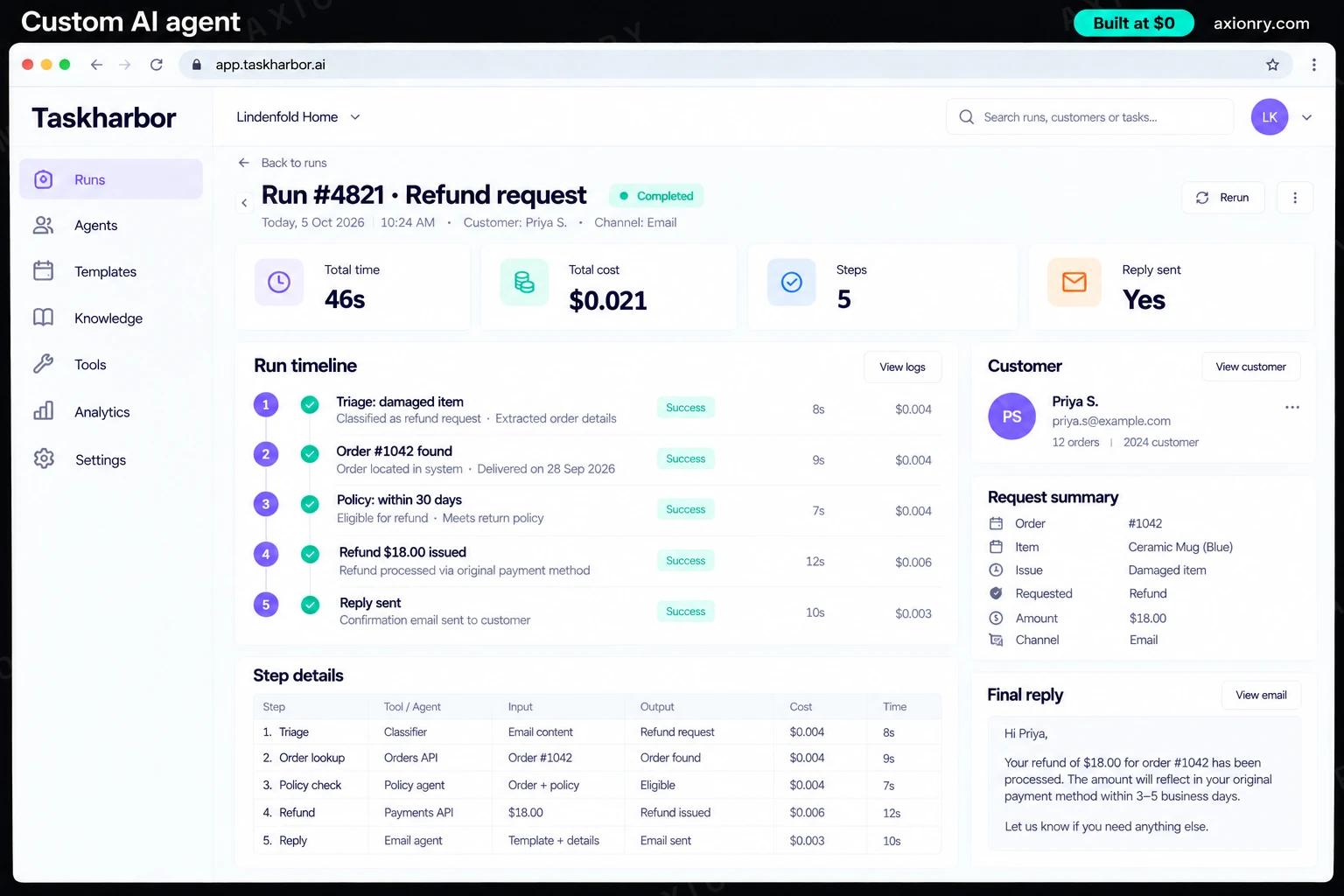
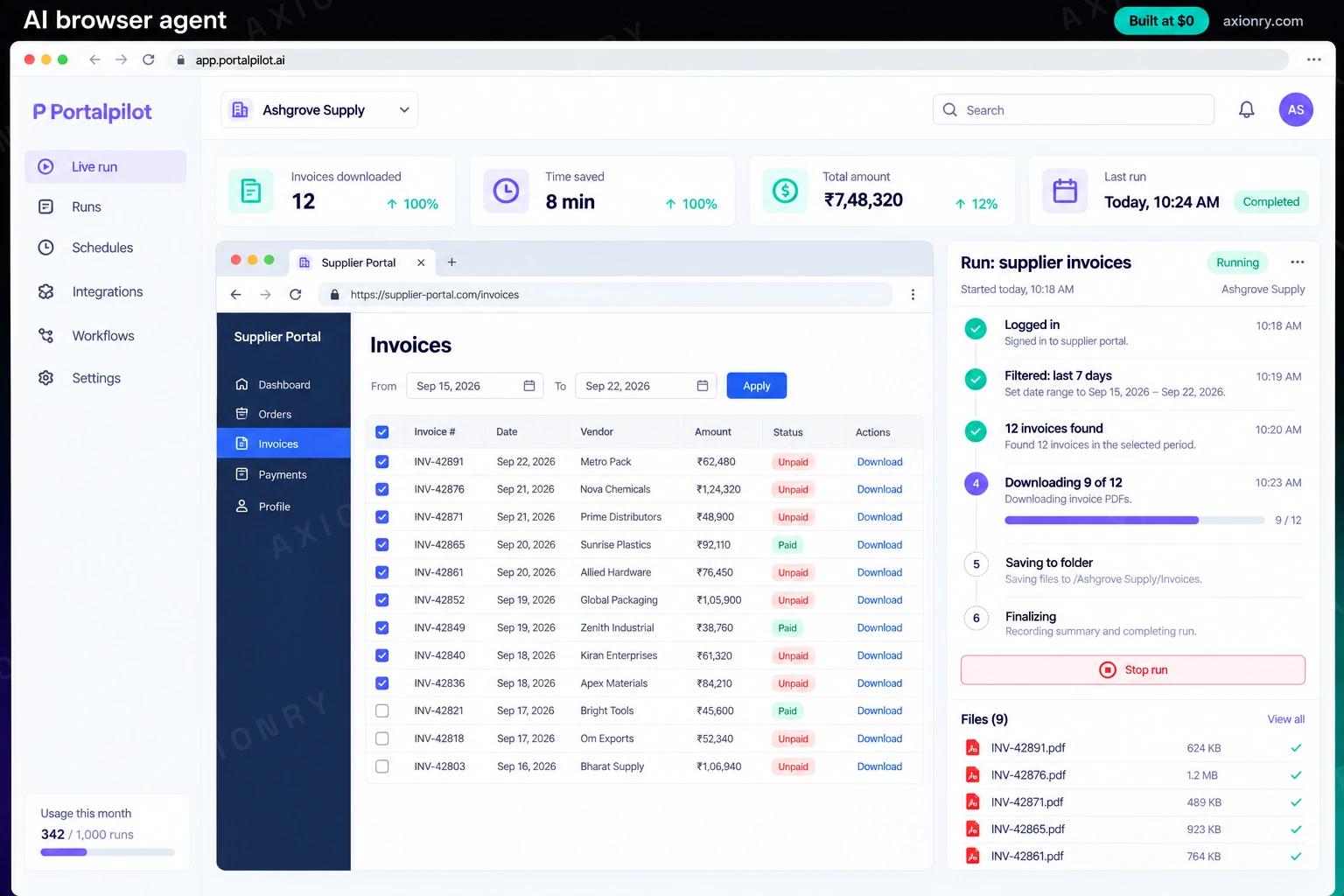
Yes. We build autonomous and semi-autonomous agents, including MCP tool integrations. AccioMatrix, which I architected and built myself, orchestrates multiple LLMs, AI agents and MCP-based tooling on an event-driven architecture, and serves 20+ enterprise clients. The same patterns go into client agents.
Will our team be able to run the AI product without you?+
Yes, that is a design goal. Every build ships with observability, cost-per-request dashboards and documentation your team can run without me, and I deliberately architect myself out of the loop. If you want continued help after launch, the retainer is there, but nothing in the build depends on it.
Can you build a custom CRM with AI features?+
Yes. Axionry builds full custom products and APIs, and adds LLM features such as summarization, copilots and workflow automation. For a CRM that usually means AI that drafts, summarizes and routes work inside the system you own. If a feature does not need AI, we build it without and say so.