Fractional CTO Services in Phoenix
The best Fractional CTO Services in Phoenix, at the best available price.
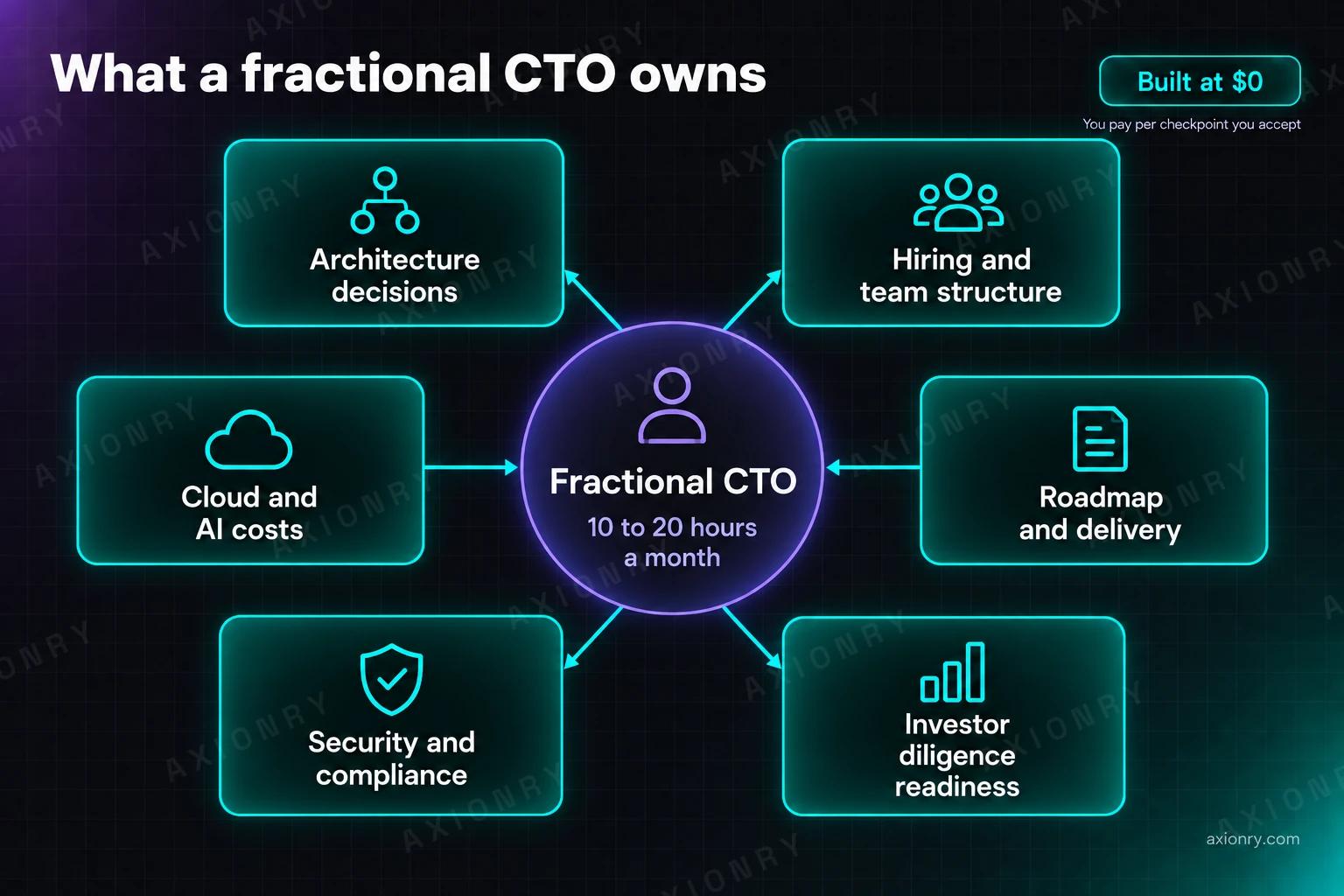
You have engineers, or contractors, or an agency, and no one whose job is to decide whether the architecture, the spend and the hiring plan are right. That is the gap: ten to twenty hours a month from someone who has built and run the thing you are building, and who will tell you when you are about to spend money you do not need to.
Phoenix has become one of the country's main semiconductor manufacturing regions, with new chip fabs in the north of the metro and Intel's long-standing presence in Chandler, alongside financial back offices, health systems and one of the first cities to run driverless taxis at scale. Arizona State University supplies a large engineering workforce, and costs remain well below California's.
Phoenix companies that have grown on agencies and contractors often reach the point where nobody owns the architecture. A fractional CTO takes that role part time.
What you get
- Architecture decisions made and written down, with the trade-offs stated rather than assumed
- Infrastructure and AI spend reviewed against what you actually use, not what you provisioned
- Hiring: what roles you need next, what to test for, and which hires to delay
- A technical voice in investor and customer conversations when you need one
- Honest counsel on build versus buy, including when the answer is to buy
Scoped to the hours you actually need. Month to month, with no long lock-in, because a fractional CTO you cannot leave is just an expensive employee.
Invoiced in USD, payable by Wise or bank transfer.
Request a callback
You speak to the engineer who does the work. No sales rep, no deck.
Who builds here
Software Development Company
Phoenix companies are growing faster than the local senior software pool, and most need dependable engineering capacity inside their own team more than a separate project.

What Phoenix companies build with us
Get it built at $0.
That is not a discount. It is when you pay. The work is split into checkpoints with acceptance criteria written down before anything starts, and each checkpoint is invoiced only after you have seen it and accepted it. No deposit.
- $0 to start
- You hold every dollar until a checkpoint is delivered and you accept it. No approval, no invoice.
- Fixed cost, unlimited features
- Or hire the team outright: one fixed monthly cost, unlimited feature development, any stack.
- The engineer takes your call
- The person on your first call is the one who architects and writes it. No account managers, no bench time.
A US agency quotes $50,000 to $150,000 for the same build and asks for 40 to 50% of it before a line is written. Account managers, project managers, sales commission and bench time. None of it appears in your product.
Three stages, nothing hidden.
Twenty-minute call
We work out whether you need a fractional CTO at all. Plenty of teams need one good senior engineer instead, and that is a cheaper answer worth hearing.
First month, diagnostic
Architecture, infrastructure spend, delivery process and team shape reviewed, with the findings written down plainly and prioritised by what they cost you.
Ongoing retainer
A fixed block of hours each month. Regular reviews, decisions when they are needed, and direct access rather than a ticket queue.
What actually applies here.
Regulation and data
Arizona has no comprehensive consumer privacy law of its own, so most companies here work under federal sector rules, the state's data breach notification law and the privacy laws of the states their customers live in. Semiconductor suppliers face US export controls on advanced chip technology and tight customer confidentiality terms. Arizona does not observe daylight saving time, so its overlap with other time zones shifts during the year.
Contracting and payment
You contract with an individual consultant based in India rather than a US entity. Invoices are issued in USD and paid by Wise or bank transfer, with no payroll and no benefits load on your side. Whatever documentation your finance team or counsel needs from an overseas contractor is provided before work starts.
Working hours
Calls in your morning, Mountain time, a shared window at the start of your day, and work handed over overnight so the next round is waiting when you start.
Arizona has no privacy law. Do we still need privacy controls?
Usually yes, because the laws of your customers' states apply, and enterprise buyers ask for them regardless. We build consent, access and deletion in from the start.
How does the time difference work with Arizona?
Calls are in your morning. Because Arizona stays on standard time all year, the shared window moves by an hour when the rest of the country changes clocks, and we adjust the call slot accordingly.
Do we actually need a fractional CTO?
Often not, and you will be told so. If the real problem is that nobody is building fast enough, a senior engineer is a better spend. A fractional CTO earns its cost when the expensive decisions are the bottleneck: architecture, infrastructure spend, build versus buy, and who to hire next.
How is this different from an advisor?
An advisor gives opinions. This role makes decisions, writes them down, and is accountable for them. Where it helps, the work is done rather than delegated, including the parts that involve opening the codebase.
What happens to our existing team?
They keep building. The role is to remove the decisions that block them and to be honest with you about where the team is short, which is usually a smaller gap than founders fear.
Fractional CTO
Senior technical leadership, 10-20 hrs/month: architecture, AI strategy, cost control.