Fractional CTO Services in Minneapolis
CTO-level leadership for Minneapolis teams, without the $178k salary.
You have engineers, or contractors, or an agency, and no one whose job is to decide whether the architecture, the spend and the hiring plan are right.
Minneapolis and St. Paul host a remarkable number of large corporate headquarters for their size, including health insurers, retailers, food companies and one of the world's densest medical device clusters. Software demand here is dominated by enterprise buyers in health, retail and medtech.
Medtech startups here often have strong hardware and clinical leadership but no software lead. A fractional CTO covers that part time.
What you get
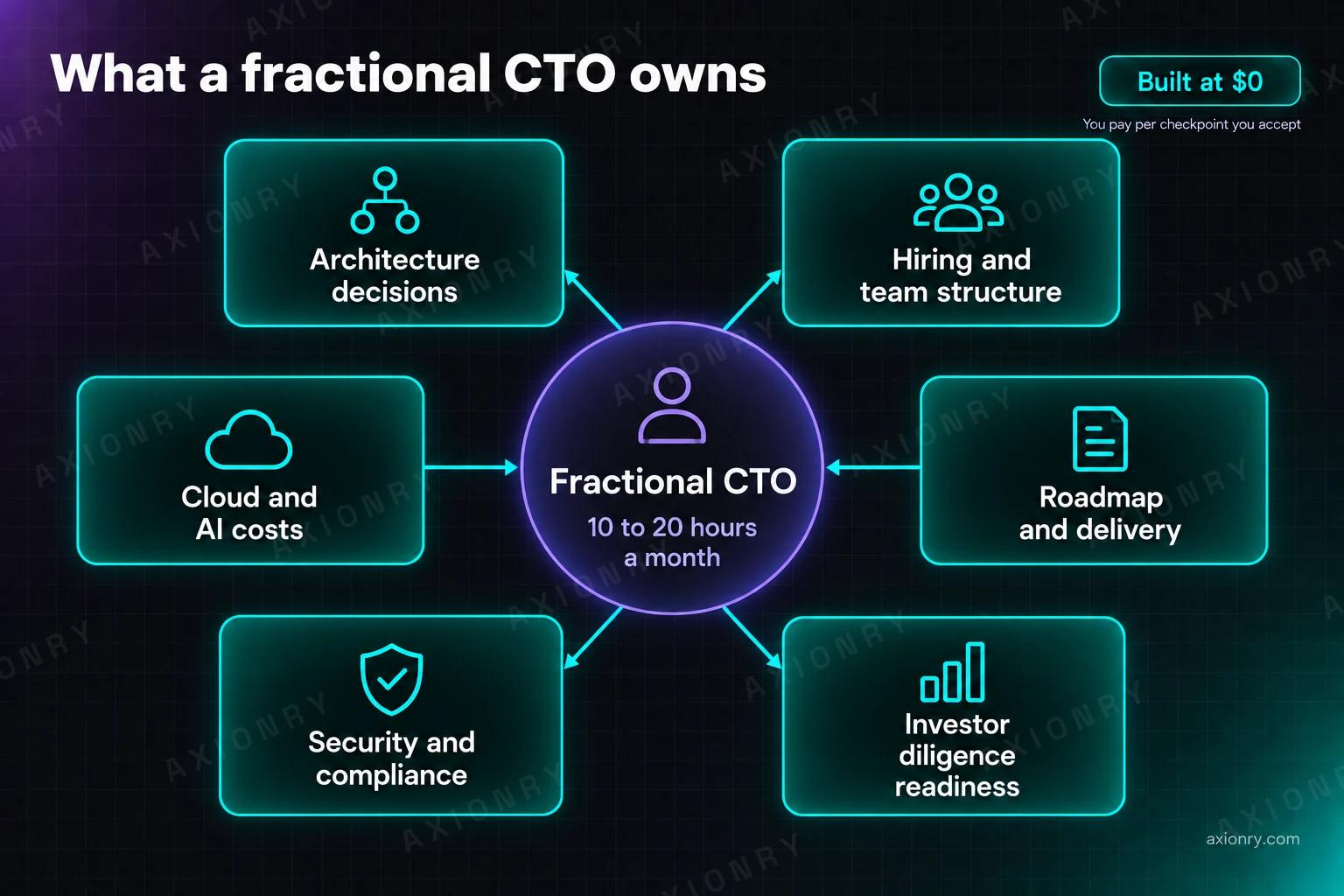
- Architecture decisions made and written down, with the trade-offs stated rather than assumed
- Infrastructure and AI spend reviewed against what you actually use, not what you provisioned
- Hiring: what roles you need next, what to test for, and which hires to delay
Scoped to the hours you actually need. Month to month, with no long lock-in, because a fractional CTO you cannot leave is just an expensive employee.
Invoiced in USD, payable by Wise or bank transfer.
Request a callback
You speak to the engineer who does the work. No sales rep, no deck.
Minneapolis, in numbers
A full-time head of technology in the Minneapolis-St. Paul area earns a median $178,080 a year (about $254,400 with benefits and payroll costs). A fractional CTO gives a Minneapolis business that experience for a few days a month, with the same ownership of architecture, vendors, security and hiring.
Who builds here
On-Premise LLM Deployment
Minneapolis medtech companies and health insurers hold regulated data that rarely can leave their environment, so a private model is usually where AI starts.

What Minneapolis companies build with us
Get it built at $0.
That is not a discount. It is when you pay. The work is split into checkpoints with acceptance criteria written down before anything starts, and each checkpoint is invoiced only after you have seen it and accepted it. No deposit.
- $0 to start
- You hold every dollar until a checkpoint is delivered and you accept it. No approval, no invoice.
- Fixed cost, unlimited features
- Or hire the team outright: one fixed monthly cost, unlimited feature development, any stack.
- The engineer takes your call
- The person on your first call is the one who architects and writes it. No account managers, no bench time.
A US agency quotes $50,000 to $150,000 for the same build and asks for 40 to 50% of it before a line is written. Account managers, project managers, sales commission and bench time. None of it appears in your product.
What actually applies here.
Working hours
Three or more hours of daily overlap with Central time, calls in your morning, and same-day replies on working days.
What does a full-time CTO cost in Minneapolis?
Computer and information systems managers in the Minneapolis-St. Paul area earn a median $178,080 a year (about $254,400 with benefits and payroll costs), before recruiting fees and equity. A fractional CTO is paid per accepted checkpoint, with nothing upfront.
What does Minnesota's profiling right mean for an AI feature?
If your product makes decisions that produce legal or similarly significant effects, consumers can question the result, learn the reasons and, in some cases, have it reviewed. We build the logging and explanations that make that possible.
Do you work on medical device software?
We build with the documentation, traceability and testing a regulated route needs. Classification and submissions are led by your regulatory team.
Fractional CTO
Senior technical leadership, 10-20 hrs/month: architecture, AI strategy, cost control.