Fractional CTO Services in Mumbai
The best Fractional CTO Services in Mumbai, at the best available price.
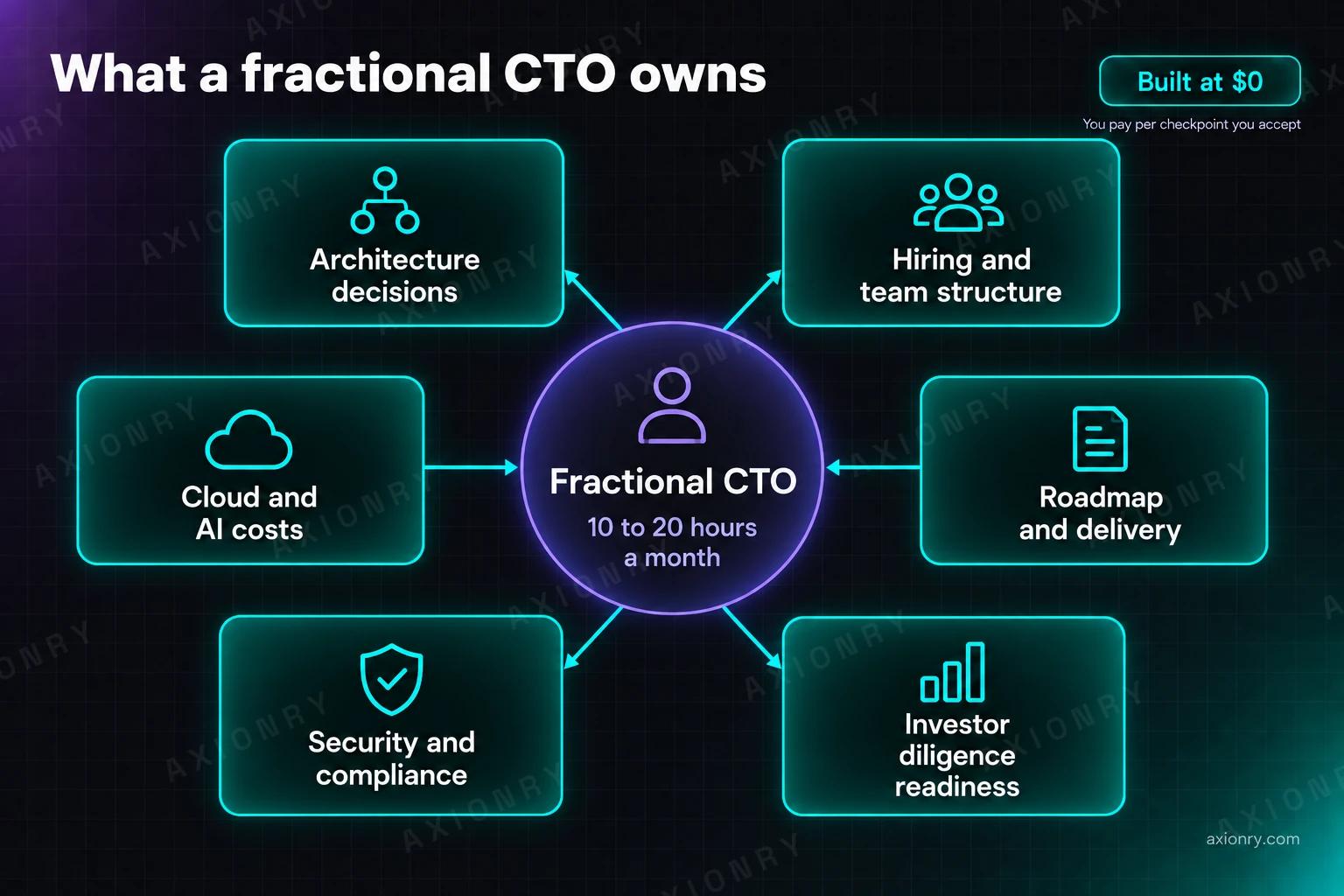
You have engineers, or contractors, or an agency, and no one whose job is to decide whether the architecture, the spend and the hiring plan are right. That is the gap: ten to twenty hours a month from someone who has built and run the thing you are building, and who will tell you when you are about to spend money you do not need to.
Mumbai is India's financial capital, home to the RBI, SEBI, the NSE and the BSE and to the head offices of many large banks, insurers, brokers and asset managers, with film, television and streaming as its other defining industry. Software sold here almost always passes through an information security review shaped by those regulators, and the person signing off is as likely to be a risk officer as a technologist.
Brokers, NBFCs and wealth firms in Mumbai often have a strong business team and an IT function built around managing vendors. A fractional CTO helps them decide what to build in-house and what to buy, and how to answer the technology questions in regulatory and board reviews.
What you get
- Architecture decisions made and written down, with the trade-offs stated rather than assumed
- Infrastructure and AI spend reviewed against what you actually use, not what you provisioned
- Hiring: what roles you need next, what to test for, and which hires to delay
- A technical voice in investor and customer conversations when you need one
- Honest counsel on build versus buy, including when the answer is to buy
Scoped to the hours you actually need. Month to month, with no long lock-in, because a fractional CTO you cannot leave is just an expensive employee.
Invoiced in INR, with GST as applicable.
Request a callback
You speak to the engineer who does the work. No sales rep, no deck.
Who builds here
On-Premise LLM Deployment
Mumbai's banks, brokers, insurers and the vendors that sell to them are the buyers most likely to reject a product because prompts leave for a third-party model API. Running inference inside their own Indian cloud region or data centre removes the objection that most often stalls the deal.

What Mumbai companies build with us
Get it built at $0.
That is not a discount. It is when you pay. The work is split into checkpoints with acceptance criteria written down before anything starts, and each checkpoint is invoiced only after you have seen it and accepted it. No deposit.
- $0 to start
- You hold every dollar until a checkpoint is delivered and you accept it. No approval, no invoice.
- Fixed cost, unlimited features
- Or hire the team outright: one fixed monthly cost, unlimited feature development, any stack.
- The engineer takes your call
- The person on your first call is the one who architects and writes it. No account managers, no bench time.
A US agency quotes $50,000 to $150,000 for the same build and asks for 40 to 50% of it before a line is written. Account managers, project managers, sales commission and bench time. None of it appears in your product.
Three stages, nothing hidden.
Twenty-minute call
We work out whether you need a fractional CTO at all. Plenty of teams need one good senior engineer instead, and that is a cheaper answer worth hearing.
First month, diagnostic
Architecture, infrastructure spend, delivery process and team shape reviewed, with the findings written down plainly and prioritised by what they cost you.
Ongoing retainer
A fixed block of hours each month. Regular reviews, decisions when they are needed, and direct access rather than a ticket queue.
What actually applies here.
Regulation and data
The DPDP Act 2023 sits on top of sector rules that matter more day to day here. RBI-regulated entities follow its 2023 Master Direction on outsourcing of IT services, which requires audit and inspection rights over vendors and incident reporting within hours, and its 2018 direction that payment system data be stored only in India. SEBI's Cybersecurity and Cyber Resilience Framework, issued in August 2024, applies to brokers, depositories, asset managers and other regulated entities, though its data localisation requirement was put in abeyance in December 2024. Insurers follow IRDAI's Information and Cyber Security Guidelines, 2023. Maharashtra's IT and ITeS Policy, 2023 gives data centres essential service status, and Navi Mumbai has become one of the country's main data centre locations.
Contracting and payment
Simple domestic contracting. Invoices in INR with GST as applicable, under a standard services agreement. No cross-border payment friction, no forex conversion cost, and no time spent on paperwork for an overseas supplier.
Working hours
Same time zone. I work from India on IST, so calls, reviews and replies all happen inside your normal working day.
Can you work within RBI or SEBI vendor requirements?
Yes. That means completing your vendor risk assessment, agreeing audit and inspection rights in the contract, working through named, limited-privilege access, and keeping data in Indian regions of your own accounts. Your compliance team decides how the engagement is classified under your outsourcing policy.
Does SEBI's framework require data to stay in India?
CSCRF originally included a localisation requirement, but SEBI put it in abeyance in December 2024 pending further consultation, so check the current position with your compliance team. We deploy into Indian regions by default, which keeps you covered if the requirement returns.
Do you work with media and production companies?
Yes. Typical projects are transcription and subtitles, search over footage and script archives, and internal tools for scheduling and rights tracking. Content stays in your own storage, and nothing is sent to a model provider you have not approved.
Do we actually need a fractional CTO?
Often not, and you will be told so. If the real problem is that nobody is building fast enough, a senior engineer is a better spend. A fractional CTO earns its cost when the expensive decisions are the bottleneck: architecture, infrastructure spend, build versus buy, and who to hire next.
How is this different from an advisor?
An advisor gives opinions. This role makes decisions, writes them down, and is accountable for them. Where it helps, the work is done rather than delegated, including the parts that involve opening the codebase.
What happens to our existing team?
They keep building. The role is to remove the decisions that block them and to be honest with you about where the team is short, which is usually a smaller gap than founders fear.
Fractional CTO
Senior technical leadership, 10-20 hrs/month: architecture, AI strategy, cost control.